

 Image 1 of 1
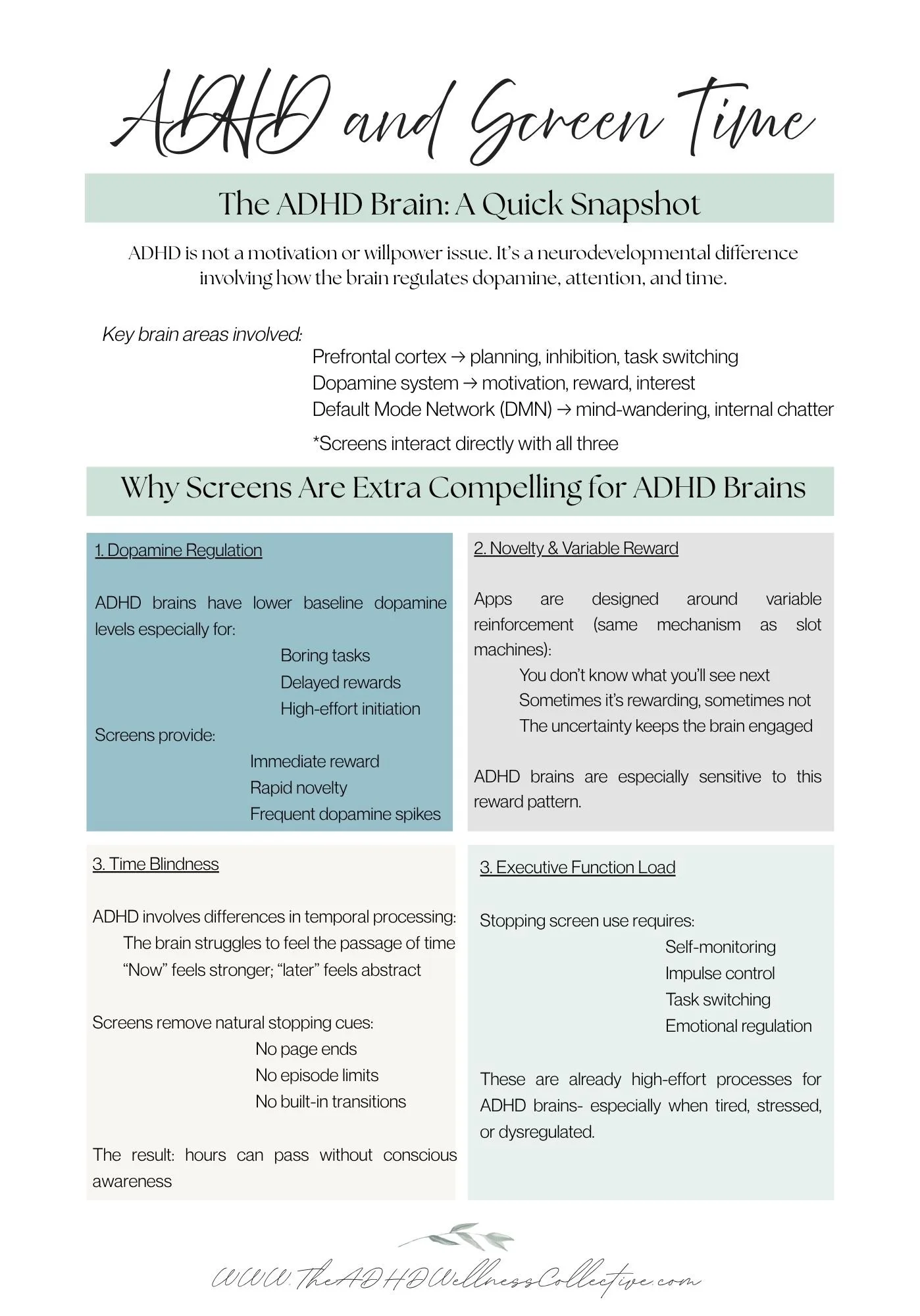
Screens can be especially challenging for ADHD brains because they are designed to deliver rapid, high-reward stimulation that easily captures attention and makes it difficult to disengage. Constant notifications, scrolling, and quick content shifts flood the brain with dopamine, reinforcing the urge to keep seeking more input while making slower, less stimulating tasks (like work, school, or even rest) feel harder to start or sustain. This overstimulation can also strain executive functions—like time awareness, impulse control, and task switching—leading to time slipping away unnoticed and increased frustration or burnout. Over time, frequent screen use can heighten distractibility, disrupt sleep cycles, and leave the nervous system feeling wired yet depleted, creating a cycle that’s tough to break without intentional boundaries and support.
Screens can be especially challenging for ADHD brains because they are designed to deliver rapid, high-reward stimulation that easily captures attention and makes it difficult to disengage. Constant notifications, scrolling, and quick content shifts flood the brain with dopamine, reinforcing the urge to keep seeking more input while making slower, less stimulating tasks (like work, school, or even rest) feel harder to start or sustain. This overstimulation can also strain executive functions—like time awareness, impulse control, and task switching—leading to time slipping away unnoticed and increased frustration or burnout. Over time, frequent screen use can heighten distractibility, disrupt sleep cycles, and leave the nervous system feeling wired yet depleted, creating a cycle that’s tough to break without intentional boundaries and support.